
The Worm Inside the Apple


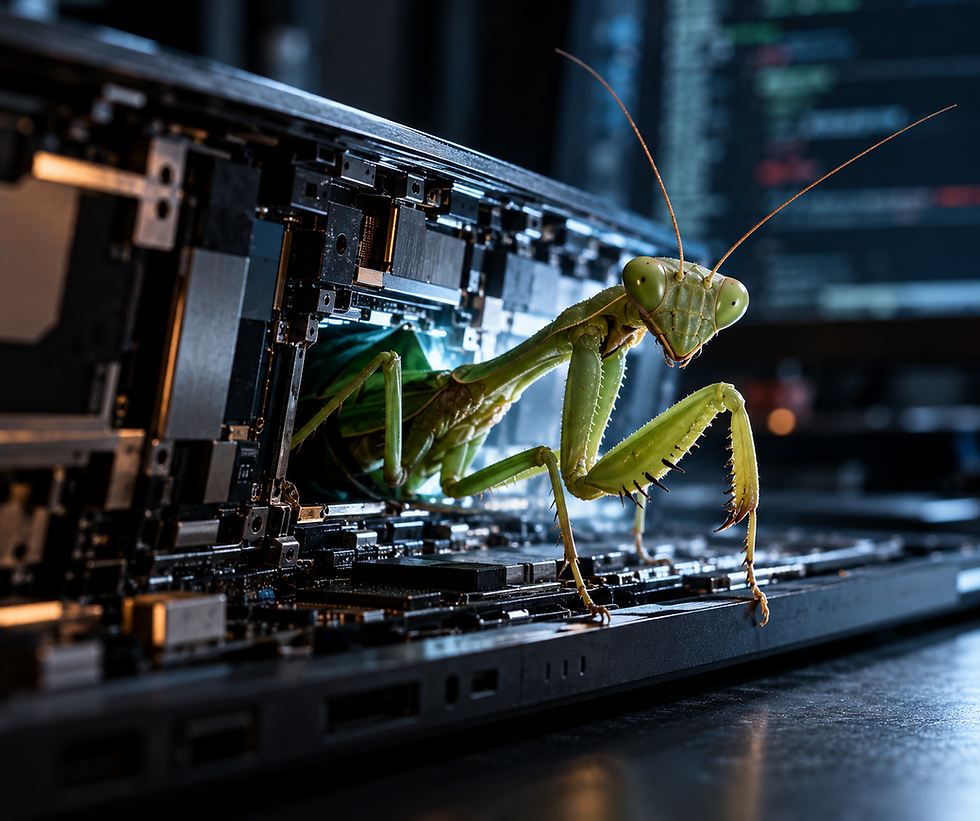
Every secure system depends on the same assumption: what looks legitimate can be trusted. A PDF arrives. A font is rendered. A preview is generated. Nothing appears unusual. But CVE-2026-86950 showed how something as ordinary as a document could hide a path deep into Apple’s CoreGraphics. Like a worm beneath the skin of a perfect-looking apple, the danger remained invisible on the surface—until the file was processed and the flaw reached the core.
Phase 1 — The Perfect Apple
A perfect apple can hide a worm.
From the outside, nothing has changed. The skin is intact. The fruit looks healthy. But somewhere beneath the surface, something has already reached the core.
That is an unusually fitting metaphor for CVE-2026-86950, a vulnerability in Apple CoreGraphics that Apple says may have been exploited in highly sophisticated attacks against specific targeted individuals.
And the possible carrier was something remarkably ordinary: a PDF.
Phase 2 — The Worm Finds the Core
CoreGraphics sits deep inside Apple’s graphics stack, handling 2D drawing, image rendering and PDF processing.
Researchers analyzing Apple’s patch discovered an inconsistency in how glyph coordinates were converted into fixed-point values. Under carefully manipulated conditions, CoreGraphics could calculate a glyph’s bounding box incorrectly, allocate a buffer that was too small and then write beyond its boundaries.
To demonstrate it, researchers created a malicious PDF containing a specially crafted TrueType font.
Open the fruit, and the worm begins moving.
The resulting public proof-of-concept triggers a controlled out-of-bounds write and crashes vulnerable macOS and iOS systems.
Importantly, however, the published PoC does not achieve code execution. Building a complete exploit from that memory-corruption primitive would require additional work that the researchers have not demonstrated.
Phase 3 — Did the Worm Travel Through WhatsApp?
This is where the story becomes more intriguing.
Apple credited Meta Product Security with discovering the vulnerability.
Researchers therefore examined recent WhatsApp versions and discovered new protections inside its attachment scanner. The newer code inspects PDFs for embedded font streams and flags malformed, undecodable or unverified font programs as high risk, preventing automatic processing.
The pieces appear to fit.
But they do not yet prove the route the worm took.
Researchers described WhatsApp as a possible delivery vector, but their published analysis does not demonstrate a working WhatsApp exploit chain. An initial statement suggesting a more specific delivery scenario was subsequently removed as speculation.
There is therefore evidence pointing toward the orchard, but no confirmed trail showing exactly how the worm entered the apple.
Phase 4 — Apple Cuts Out the Rotten Core
Apple patched CVE-2026-86950 on September 28.
One day later, CISA added the vulnerability to its Known Exploited Vulnerabilities catalog, requiring U.S. federal agencies to apply the fix by October 2.
For users, the immediate response is straightforward: update affected Apple devices as soon as possible.
Apple has not published a workaround for systems that cannot immediately update, and no network indicators, attacker identities or in-the-wild exploit payloads have been made public.
Phase 5 — The Lesson Beneath the Skin
The lesson goes beyond one vulnerability.
Sometimes the attack does not need to smash through the outside of the system. It only needs to hide inside something the system already knows how to consume.
A document. A font. A preview.
The apple can look completely untouched.
Until the worm reaches the core.
The Hacker News


Comentarios